
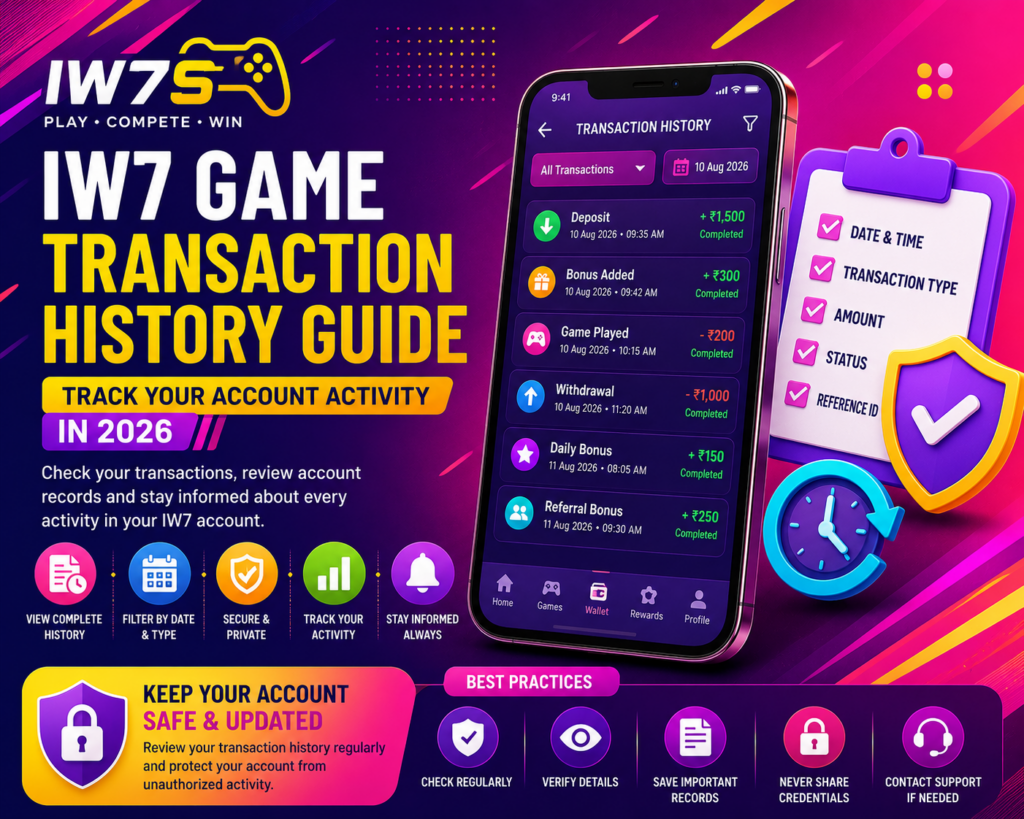
IW7 Game Transaction History can help users understand and review activity associated with their account. Keeping track of account records can make it easier to identify recent activity, understand changes, and notice entries that may require further attention.
A transaction history can be particularly useful when users want to review previous account activity instead of relying only on their current balance or status.
This guide explains what transaction history means, what information users may find in an activity record, and how to review account records responsibly.
What Is IW7 Game Transaction History?
Transaction history is a record of relevant account activity.
Depending on the platform and available features, an activity record may contain information such as:
- Date and time
- Transaction or activity type
- Amount or value where applicable
- Status
- Reference information
- Completed or pending activity
- Other account-related details
The exact information displayed can vary according to the platform version and account settings.
Why Should You Review Your Account History?
Regularly reviewing account activity can help users maintain better awareness of their account.
A history review may help you:
- Understand previous activity
- Confirm whether an action was completed
- Check dates and statuses
- Identify unexpected entries
- Keep personal records
- Report an issue with accurate information
It is generally easier to investigate a problem when you know when the activity occurred and what type of activity was involved.
Where Can You Find Transaction Records?
The location of account records can depend on the current platform interface.
Users may find relevant information under areas such as:
- Account
- Wallet
- History
- Activity
- Transactions
- Records
- Account dashboard
Interface names can change when a platform is updated.
If you cannot locate a history section, review the available account menus or use the platform’s appropriate support resources.
How to Review Your Account Activity
A simple review process can help you understand your records.
Step 1: Open Your Account
Access your account through the normal platform interface.
Step 2: Find the History Section
Look for an option related to transactions, activity, records, or history.
Step 3: Select the Relevant Period
If date filters are available, choose the period you want to review.
Step 4: Check Individual Entries
Review the date, activity type, status, and other available details.
Step 5: Compare With Your Own Records
If you keep personal records, compare them with the platform information.
Step 6: Report Unclear Activity
If you notice an entry that you do not recognize, collect the relevant details before contacting the appropriate support channel.
Understanding Transaction Status
Activity records may use different status labels.
Common examples can include:
Completed
The activity has been processed successfully according to the displayed status.
Pending
The activity has not yet reached its final status.
Failed
The attempted activity was not completed.
Cancelled
The activity was cancelled before completion.
The exact status terminology can vary between platforms and versions.
Why Dates and Times Matter
Dates and times can provide useful context when reviewing account activity.
For example, if you are investigating an unexpected entry, note:
- The date
- Approximate time
- Activity type
- Displayed status
- Reference information
This information can make it easier to explain the issue to support.
Keeping Personal Account Records
Users who frequently review their account activity may find it useful to maintain their own records.
You can record:
- Important dates
- Relevant reference numbers
- Activity descriptions
- Status information
- Support case details
Avoid storing sensitive passwords, OTPs, PINs, or other confidential credentials in personal notes.
What to Do About an Unrecognized Entry
If you notice an activity entry that you do not recognize, do not immediately assume that your account has been compromised.
First:
- Check the date and time.
- Review the activity description.
- Confirm whether another authorized action may explain the entry.
- Review your account security settings.
- Contact the appropriate support channel if the activity remains unclear.
Do not share your password or one-time authentication codes with another person while investigating an account issue.
Transaction History and Account Security
Account history can also be useful when maintaining good security habits.
If you notice unusual activity, review:
- Recent account access
- Security settings
- Password status
- Active sessions where available
- Recent account changes
Your existing security settings should remain enabled where appropriate.
For broader account protection, users should also follow the platform’s recommended security practices.
Transaction History on Mobile Devices
Mobile users may access account records through a mobile browser or application interface, depending on the available platform features.
If the history page does not load correctly, try:
- Checking your internet connection
- Refreshing the page
- Restarting the browser
- Updating the application where applicable
- Testing another supported browser
- Restarting the device
If the issue continues, record the error message before contacting support.
What If Your History Does Not Match Your Records?
Occasionally, users may notice a difference between their personal notes and displayed account information.
Before reporting the issue, check:
- Date and time
- Transaction status
- Reference information
- Whether the activity is still pending
- Whether multiple entries relate to the same activity
If the difference remains unexplained, provide the relevant information to support without sharing confidential credentials.
Keeping Your Account Information Private
Transaction records can contain sensitive information.
When taking screenshots or sharing records, avoid exposing:
- Passwords
- OTPs
- PINs
- Authentication codes
- Complete payment information
- Other confidential security details
If a screenshot is required for troubleshooting, hide sensitive information before sharing it.
Common Mistakes When Reviewing Account History
Users sometimes misunderstand account records because they only look at one part of an entry.
Common mistakes include:
- Ignoring the transaction status
- Looking at the wrong date
- Confusing pending and completed activity
- Missing reference information
- Assuming an unfamiliar description means unauthorized activity
- Sharing sensitive screenshots publicly
Review the complete entry before reaching a conclusion.
How to Organize Account Activity
For users who want to keep their records organized, a simple system can help.
Consider recording:
| Information | Example |
|---|---|
| Date | 10 August 2026 |
| Activity | Account transaction |
| Status | Completed |
| Reference | Platform reference |
| Notes | Personal record |
Do not store sensitive login credentials in the same record.
When Should You Contact Support?
Support may be appropriate when:
- A transaction remains unresolved
- An activity appears incorrect
- A status does not change as expected
- An important record is missing
- You cannot access the history section
- A technical error prevents you from viewing records
- An unfamiliar activity cannot be explained
Provide clear details about the issue so that the support team can understand what you are reporting.
How to Prepare a Support Request
A clear support request should include:
Issue: What happened?
Date: When did it happen?
Activity: What type of record is involved?
Status: What status is displayed?
Reference: Is there a reference number?
Device: Which device or browser were you using?
Avoid including your password, OTP, PIN, or other private credentials.
Benefits of Reviewing Account History
Regularly reviewing records can provide several practical benefits.
It can help users:
- Understand previous account activity
- Keep better personal records
- Identify inconsistencies
- Confirm activity status
- Provide accurate information to support
- Maintain better account awareness
Transaction history is therefore useful not only when something goes wrong but also as part of normal account management.
Frequently Asked Questions
What is IW7 Game Transaction History?
IW7 Game Transaction History refers to the available record of relevant activity associated with an account.
What information can transaction history contain?
Depending on the platform, records may show dates, activity types, statuses, reference information, and other relevant details.
Can I review older account activity?
This depends on the platform’s available history and record-retention features. If date filters are available, they may make older entries easier to locate.
What should I do if I see an unfamiliar transaction?
Review the date, status, description, and reference information first. If the entry remains unexplained, contact the appropriate support channel.
Should I share my password when asking about a transaction?
No. Never share your password, OTP, PIN, or authentication codes with another person.
Why might a transaction show as pending?
A pending status generally means the activity has not reached its final status. The exact reason depends on the platform and transaction type.
Can I use transaction history to check account activity?
Yes. Where available, account history provides a convenient way to review previous activity and its displayed status.
What if transaction history is not loading?
Check your connection, refresh the page, restart your browser, and try another supported device or browser. If the problem continues, contact the appropriate support channel.
Final Thoughts
IW7 Game Transaction History provides a useful way to review available account activity and understand the status of previous records.
By checking dates, activity types, statuses, and reference information, users can maintain better awareness of their account and provide clearer details if an issue needs to be reported.
Keep account records private, avoid sharing security credentials, and use appropriate support channels whenever an activity cannot be explained.